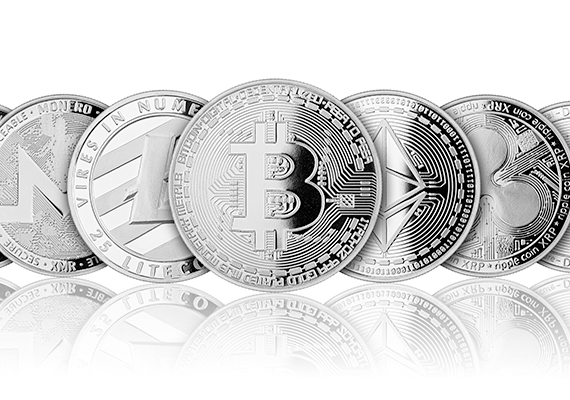
Is There a Future for Cryptocurrency in Your Portfolio?
The biggest selling point for cryptocurrency is that it's unregulated, supposedly making it free of any government control. Unfortunately, this lack of oversight appears to also be its biggest drawback.
Last fall, FTX, the world's second largest crypto exchange, was teetering on the edge of insolvency as jittery investors withdrew billions in digital assets. In a desperate attempt to avoid a total collapse the CEO of FTX arranged for it to be bought out by its rival and world's largest bitcoin exchange, Binance.
But only a day later the proposed deal was off. Corporate due diligence had raised concerns about the mishandling of customer funds, among other issues.1 This turned out to be just the tip of the mismanagement iceberg, and within a few weeks the CEO of FTX was arrested in The Bahamas and extradited back to New York. When the U.S. attorney announced the charges against the now-former CEO, he said the case was one of the largest financial crimes in U.S. history. In the absence of what would normally be required standard bookkeeping, the exchange appears to have been involved in embezzlement.
Thus, another venture that believed it was so innovative it didn't need a rulebook, proved just the opposite. But this doesn't necessarily mean that cryptocurrency or the blockchain technology behind it can’t represent an innovation that could offer real benefits in the marketplace.
Recently, several members of congress have introduced legislation that would better categorize the various types of cryptocurrency (are they a commodity or a security?) so they can be placed under the government entity that may best offer consumer protection without stifling innovation.2
Even if you've purposely avoided buying cryptocurrency directly, some investors portfolios may have some indirect exposure to it. Bloomberg, in an informal survey of pension funds, found that while none of the ten largest held any crypto directly, many were invested in funds which had some digital currency holdings.3 However, as Gil Luria, a strategist at D.A. Davidson pointed out, "Pension funds are famously yield chasers. The significant return to crypto compelled institutional investors including public pension funds to start looking at allocation to crypto."
Once the hype and Fear-Of-Missing-Out die down, cryptocurrencies have the potential of finding their true market value, demonstrating how they might ultimately be a way to facilitate the efficient flow of capital.
It shouldn't matter whether crypto is a commodity or a security, avoid chasing short-term gains through speculation. Long-term success is more likely through a truly diverse portfolio that can benefit from all sorts of innovations driving market prices.
1. http://go.pardot.com/e/91522/at-went-wrong-with-ftx-6828447/93bj3b/1963046019?h=Jp76jncTb65_x7qjqAC_Bi0lzJeU11SZoGfp0s8LOB4
2. http://go.pardot.com/e/91522/-define-roles-of-sec-cftc-html/93bj3f/1963046019?h=Jp76jncTb65_x7qjqAC_Bi0lzJeU11SZoGfp0s8LOB4
3. http://go.pardot.com/e/91522/ree-benefits-mostly-unscathed-/93bj3j/1963046019?h=Jp76jncTb65_x7qjqAC_Bi0lzJeU11SZoGfp0s8LOB4

Related articles

As the year moves forward, it's a good time to review your retirement savings strategy and make sure it still aligns with your long-term goals. Changes in income, life circumstances, and market...
Imagine someone embarking on their very first ocean cruise. They’ve booked a spot on one of the large ships that circle the Caribbean, expecting nothing but sunshine, calm seas, and postcard-perfect...

When you first learn the basics of personal investing, the conversation usually starts with stocks and bonds. Most people have a general understanding of stocks. When you buy a stock, you’re...